Thursday, 9 June 2016

Galapagos Islands


 When deciding to go to Ecuador, I had to decide whether to go to the Galapagos Islands or not. And since I don't know if I will ever come that close again, it was clear I had to go. Even if it was pretty expensive. But I really wanted to see the sea lions (still no idea what's the difference to seals), the penguins, the turtles and all the other animals that might cross my way.


And it was even better than I imagined. I would have never hoped for finding sharks so close, I could actually take a selfie with them standing one meter besides them in the water. I do have to confess, when one of the sharks suddenly started swimming around me I almost panicked, but I read it's absolutely secure being next to the sharks because the sea is so rich of food for the sharks, they have no reason to attack humans.


I quickly found out that Isla Isabela is way more beautiful than Santa Cruz, the island I was staying first because it was close to the airport (that was located on another small island). While probably the biggest city of the islands is located on Santa Cruz, there are very few opportunities to discover the nature on your own. Not so in Isabela. While just walking along, I found a turtle. penguins, sea lions, blue footed boobies, pelicans, iguanas, lizards, flamingos and lots of crabs.


In the following picture you can only see the red crabs because they are such a contrast to the black vulcano stones. But there are also black crabs that relax there and can only be seen when they are moving. And then there are some beige/brown crabs living in the sand.


There are some animals I never wanted to get so close to, like the tarantula I already wrote about, and the crabs. I never knew because I never got that close but crabs really freak me out. If I had to choose between spiders and crabs, I wouldn't know what to choose. And so when I found this really quite small bight near the beach where a penguin and some pelicans where looking for food, while a blue-footed boobie was sitting on the rock and some sea lions were playing together, I really had to work up the courage to walk out to the water on the stones populated by many many crabs.


I thought a video shows better what was happening in that bight. Keep your eyes open for movements. And no, fortunately there's no crab attack at the end. I actually got to this point by bike - which was quite hard because parts of the trail go over the beach. And I can inform you that biking on sand is nearly impossible.


What really surprised me on my first trip from the harbour was that when going to the boat and looking out onto the water, you will probably find some animal swimming around in the very clear water. Might be a shark, or a turtle, or just some small fishes. But they have this great system that keeps the harbour clean and attractive for those animals: There are only quite small boats, for no more than 20 people, and if there are more people needing a ferry, they just take more boats. But those boats don't enter the harbour. They anchor a little bit outside, and an even smaller "aquataxi" picks up the passengers to take them to the port.


What kind of disappointed me were the iguanas. There were so many of them, in different stages of life, and they were almost everywhere near the water, which was because they were the only water iguanas I think on earth, if I remember right. But I never ever saw one of them in the water. Unlike the sea lions, that you could encounter on the beach, in the water while snorkeling (they like to accompany you while diving), on some rocks near the water, on a bench, everywhere around the water.


And, because the islands are actually vulcano islands, I also climbed the nearest vulcano on Isla Isabela. I had bad luck because it was foggy and we couldn't enjoy a panoramic view over all the island, but still we got some insights into the crater. We were told that there was once a forest next to the crater, until the vulcano erupted the last time. So now, there are kind of round holes in the stone where a tree used to be but obviously burned up caused by the heat but nevertheless stopped the lava.


And because I enjoyed my time so much, I managed to get an extra day. Which was actually not planned. But, like I mentioned, the airport is on another island, so you need to go by bus to the ferry terminal, take the ferry to the airport-island and there take the bus to the airport. I did remember that from the arrival at the island. But somehow, the time needed to go there seemed to have slipped from my mind. I thought it took like half an hour, but when I had a flight to catch, it suddenly took me more than two hours to go there. Needless to say, I didn't make it in time. I probably looked really desperate, because they offered me to change my ticket to the next day. Without any fee or anything. So I suddenly had one day more. The only annoying thing was that I had to do all the trip backwards now because the airport-island has nowhere to stay for a night. But, for some reason, when I left for the airport two hours earlier the next day, I suddenly needed less than one hour and was the first passenger on the whole airport, earlier than the staff. So now I can say: miss my flight - check. And hope it will never happen again.


Monday, 6 June 2016

Amazonas


In the end of May, at the end of my semester abroad, we did our trip to Leticia. Leticia is a colombian city next to the Amazonas at the border to Brazil and Peru. From here, we could start our Amazonas-trip that took us deep into the rainforest. It was also our last trip together before we exchange students parted our ways, me heading to the Galapagos Islands while some of the others went to the Caribbean Coast and the rest just stayed in Ibague for the last days before going back home. I already miss all of them, but I will write about that seperately.


So when we arrived, we had actually no idea what was awaiting us on our 3-day trip through the rainforest. And I certainly didn't expect we would kind of live on a boat slowly driving along the Amazonas for most of the time. Neither did I expect the boat we were using was more like a kind of house-boat, called "hipimovil".


But I shortly learned this was really the best way to travel along the Amazonas. Sure, there are some speedboats, but people there have no hammocks, no change of taking pictures of the surrounding area, no possibility to spot some delfines on the river or monkeys in the trees. Also, this was a great possibility to catch up on missing hours of sleep from the previous night.


You must know, I had probably the worst night of my life on this trip. On the first day, after a day filled with activity, lots of sun and not enough water, I had quite a headache. Furthermore, on the nightwalk through the rainforest I got my pants covered with mud. Since we all slept in the same room of some "hotel" somewhere more than 50 km from Leticia, we only had one shower. I didn't want to make my bed dirty with my pants so I just sat down on the floor to read a book while waiting for my turn. Which also meant, that while I would be safe from all those insects of the rainforest in my bed because it had mosquito-nets I was quite unprotected on the floor and already slightly annoyed with fighting off some weird insects while having headache. Unfortunately, it turned out there was no potable water in this hotel, so no way to take a pill against my headache, which was bad because once I have it, the pain won't stop without pills. So I was already preparing for a horrible night. When in almost exact that moment, one of my friends spotted this huge spider on the window above my bed.


I was so shocked, while I almost jumped to the opposite corner of the room while stating I won't sleep in that bed, I didn't even feel my headache for a while. So when I finally slept, I woke up everytime I touched the mosquito-net, in paranoia the spider might sit just outside of the net, and as well woke up like every hour because my head hurt so much I felt just really really sick. And when we finally got up for the next day, the spider was gone. I never went those 5 steps to the bathroom that carefully.


On the bright side, now I definitely won't ever forget my trip to the amazonian rainforest! The climate was really quite humid when leaving the river, but on the boat we could enjoy being cooled by the winds. What impressed me most was how wide the Amazonas really is. It's more like a big lake than a river, I guess the biggest river I saw until now had less than a fifth of the width of the Amazonas. And I can't imagine that the water line even rises some months of the year. Where does all this water even come from? They told me, there's this island called "Isla Fantasia", because every year the island disappears. That's why the houses are built on piers - and some years, even that isn't enough.


There are actually lots of people living even in the farthest spots along the river. They are organized in communities and even have TV and such stuff, so definitely different from what I expected. But they do know the plants around and some of the communities even have their own language. And some of the bigger communities are called "cities" and have at least 2 different churches - not only TV found its way into those regions. And, I was quite surprised, even 70 km away from Leticia, the nearest city that's probably not bigger than my hometown I grew up with, I had data on my phone and could get into the net. Never expected that - but really great because I really needed to share my spider-story.


Some weeks back, I was in the desert (I didn't manage to write about it, maybe it will follow) and they told me the stars will be marvellous. They were, but it was nothing compared to the stars in the rainforest, far away from city lights. That's a sight one can only enjoy and hope to see soon again! And what I would also totally do again is go to the hotel we were the last night. They had tame monkeys and parrots. The monkeys were really cute, one even sat down on my arm. But stay away from the parrots, they are mean! I got attacked by two of them, and one actually pecked me in my leg, I still have the mark. But then, I also had more than 140 mosquito bites all over my body (I counted them because my friends did a bet on how many I have) so this one little peck didn't really matter.


And I am totally sure I didn't mention all the important things I experienced while there, so you better ask about more stories when I come back! I don't know if I would go into the rainforest again, but I am really glad I got the opportunity to go there at least once in my life!

Monday, 23 May 2016

Universidad de Ibagué


Last thursday I had my last day of university here in Ibagué (and maybe even my last day of university ever). So I would like to tell how studying here was like. First, I only took two classes, so one could say I had it pretty easy. But then, everything was in spanish so it took me way more time, especially the first month, to read all the material, prepare for classes (and without preparation I was lost), do the tasks, prepare the presentations and study for the exams.


The grading system is quite different from here. The grades go from 0 to 5, almost like in Austria, but here 5 is the best you can achieve, and also, while you need 50 % to pass in Austria and achieve a grade better than 5, in Colombia the grades are more like points to gain. So if you don't do your task, you get 0. If you do it, but not that well, you get 2,5. And if you do it very well, you get 5. In the end, you need at least 3 to pass the class, therefore 60 %.


The class is seperated in three mostly egual parts of the semester. At the end of each part they tell you your current grade for these part so you know what you need for the following part to pass the class. Like I said, I took two classes and the grading was also different in those two classes. In the first one, there were no exams, just tasks to do in class as well as homework and two presentations. At the end of each part there was an autoevaluation where you could grade yourself as well (which made up 15  % of the final grade).


The other class did have exams, there was an exam with the value of 25 % at the end of each part with questions of the content we learned in those weeks, and the last one had questions from all the semesters. The exams were multiple-joice, so no need to write something, just making your x on the one answer that is right. And, what I thought to be really strange: The questions as well as the answers used exactly the same words as in the texts we had to study. Good for me - I don't think I would have understood the questions if they used different phrases to make it more difficult. But strange for me nevertheless.


The other 10 respectly 5 percent each part were achieved by doing cases in class and preparing presentations. That quite annoyed me. In Austria, we have this one exam in the end that decides your grade. In most classes you don't need to do anything before. Maybe you have do to an additional task like write a paper or do a presentation. But that's it. No cases every class, no two presentations, three exams and two additional quizzes. I guess it's better for the students to always do small pieces of work instead of one huge pile of work once and it makes class easier to pass. But it took me some time to adapt to "there's always something to do for each class".

The professors of my courses were all really nice and helpful, I even got the number of one of them so I could contact him if I had questions, and when I didn't understand, they translated what they said for me to english. The students here do know english, they even told me they have classes in english. But nobody is pretty eager to talk in english and it seems their english classes are more like "the texts are in english, but you can speak spanish in class as well". So, I guess right now my spanish is better than the english of most of them.


Also, what I noticed right away is that all the students tend to dress quite nice for every class. Almost all guys wear button-down shirts or polo shirts, and blouses, dresses and even high-heels are not incommon for girls. I guess that's because it is a private university - at the University of Tolima, same city but public university, punks were a quite common sight. Also, students here are quite young. They are allowed to enter university at 16 and, because it's private, tend to finish it as soon as possible. I met noone my age (except for the other exchange students), which I definitely wasn't used to.


What surprised me was the punctuality. Yes, I knew they wouldn't be as punctual as in an university in Austria. But still, it's not normal to arrive half an hour late to class. And it's quite strange that class finishes an hour early just because.. well most of the time I have no idea why we finished so early. I guess they just didn't want to continue anymore.


And then there were the group works. It was not that bad everytime - but I do remember this one time when we were told to prepare a presentation but noone of our group had time so we ended up meeting 2 hours before class started, therefore almost no preparation time at all, everybody showed up half an hour late and when we at last had some slides half an hour before start of classes, they started discussing if we shouldn't change the whole presentation because another concept would be better. I am not a stressed person, but this quite freaked me out - I had no idea what to present (in spanish!) and saw myself standing infront of the class reading the text on the slides and even then making mistakes because it's the first time I ever see that slide. Fortunately, we didn't have our presentations until three weeks later because after one presentation class finished and we could all go home. I guess I will miss that back in Austria - I got quite used to it until now.


I got to write for a newsletter of the Unibague, you can read it >here<.


Thursday, 19 May 2016

San Andrés


San Andrés is an island in the caribbean sea closer to the coast of Nicaragua than Colombia, but is still part of Colombia. When I read about it, I didn't think about going there, because well how special could it be? It's just an island in the middle of nowhere. Sure, the beaches are probably nice, but I have already been on the caribbean coast of Mexico and I actually don't really like beaches because of the sand everywhere. So when I was asked if I want to join, I hesitated at first. But when it turned out almost all of us exchange students are going, I knew there was no way I would miss it.


 And I am really glad I decided so! To tell truth, it impressed me so much I am already thinking about which small island I could visit next. It is totally different being on a small island than being on a typical tourist destination crowded with people. I never in my life saw so many fishes, from as big as one finger to as big as both my hands combined. And in all of the colours and patterns possible. I even saw crabs on the ground, the biggest was as big as my hand. I quickly learned how to dive without alarming all these animals to hide - but they also seemed quite used to having some people swimming here.


It reminded me a little of the islands of Greece but way more beautiful. It's like here you can see the sealife that's already dead in the Mediterranean Sea. There were even what seemed to be "sea-flowers" in different colours (yellow, green, purple) and sea grapes. We were told the sea grapes are edible and they eat them in Europe, but I never heard of them before. They are really small and green, smaller than peas.


The people living in San Andres are mainly black and speak a language that's called "creole" and sounds a little bit like a mixture of english and spanish, but not than close I could understand anything. But most of the people speak both english and spanish anyway. And I soon found out that white people (like me) are really rare here and so everybody asked me where I am from and so on. But, fortunately, after I managed to get the worst sunburn I had in years, now they can't call me white anymore. I was already told, as long as I don't open my mouth I seem to be a latina.


But, because almost all of them were black, it was obvious we were not from here. And so, on our first day two officers wanted to profit from that. To get from one point to another on the island we decided to rent a golf car for all of us, they said it's fine and normal if all eight of us sit in the same car (I saw mopeds with four people on them so I thought as well it's fine). So the eight of us drove around all day on the island, and when we didn't know where to go we asked the police officers, because there were actually quite many of them all over the island. They were all really nice and helpful and told us the way. And at night, when driving home, suddenly the police showed up behind us and told us we are too many for the car. And they wanted to see the licence of our driver and even said they would take him to the police station. Then they decided a fine would be enough and we had to pay. And in the end suddenly it was okay that all of us drive home in the same car the same way we drove all day. So because we already paid for it, it's suddenly no problem? And why wasn't it a problem for the other police officers we encountered the whole day? Some might think we didn't really do anything wrong.


The sea was so warm, I always felt like it's the same temperature than outside. Which was fine on the first days because I had to make up for the missing warm water at my home in Ibagué. But still, a little colder would have been nice. But, this also ment we could go swimming in the night and it wasn't cold at all. And there was even a disco almost next to the beach that had the smokers balcony on the seaside with a small runway bridge to enjoy the night. All in all, it was really really beautiful and a new experience. And now I also know why everbody says the sea is more beautiful far from the mainland. If I could, I would go back at once.

Friday, 29 April 2016

Happy days


Now starts the time when we can count down the weeks until the semester ends. We already started planning our last weekend together and it is going to be amazing! But it also means that the time like I am spending it right now is coming to an end which makes me kind of sad. Funny thing: some of my friends here are not really sad about it and already looking forward to going back home. Sure, they said they would like to spend some more time together, but not here. So I was wondering why they experienced the time here so different than me.


 Sure, if you compare it with being at home, comfortable, able to do and eat whatever you want because you are at home and you are used to how it works, life is harder and more complicated here. But I must confess, I never think of it like that. For me, everything is like a huge adventure and also a kind of challenge - how do I manage to live in a country that's so different from home? And that's what I guess is the key to happiness. Because everything that happens that makes life more difficult is like a new challenge to conquer and everything good feels like you earned it. This makes you able to enjoy every single moment.


Even if I do have some trouble enjoying the cold shower on a cold day. Or the disgusting sweet bread they sell as "not sweet" to eat with ham or meat. Or the difficulties to find the post office ("Post office? What's that? No, I have no idea where we have that in Ibagué"). Or doing work for the university entirely in spanish. Or feeling pain in your stomage after trying something new to eat. It's really hard sometimes. But in the end I feel proud I did manage it.


They actually started calling me "la chica feliz", the happy girl, because I am always enjoying my time and find a reason to laugh in most of the situations. Also, I am "experta de chistes", expert of jokes, because I know so many jokes. Unfortunately, not all of them work here, like the one "what's white and disturbs you while eating? - An avalanche" that failed because nobody had ever seen an avalanche. I mean, how could anybody not know an avalanche? Strange world. I won't say poor people because I guess they can actually consider themselves lucky not to be bothered by avalanches.


Nevertheless, time is really great here! I mean I just need to count the times I was in the swimmingpool in the last months or some days ago someone told me I start looking like somebody from here, so no more the gringa that came from Austria. And everybody is impressed how fluently I can speak spanish already (it's not like I had a choice but I do agree now with everybody saying "it's just about the motivation to learn a language") and everybody is even more impressed when finding out I can actually speak german AND english AND spanish. I never mention that it's not that special in Austria because why should I?


And now that my spanish improved that much that I can also participate discussions and understand what's going on around me, life is so much easier. Also, we are going to San Andres tomorrow, so 5 days of caribbean feeling are waiting for me! How can it get any better?


Monday, 25 April 2016

Beautiful Austria

Last week I had a presentation about Austria and while preparing and as well while presenting it, I realized just how beautiful Austria really is and how lucky we can consider ourselves to be born there. So I decided to write something about it for all my fellow Austrians who forgot the beauty of their homecountry. (Also, it might be interesting for those considering to live in Austria some day.)


The truth is, we can easily stand competition to the countries all around the world. It starts with some simple facts. Did you know that there are really few countries all over the world that are free from Rabies (Tollwut) and Austria is one of them due to lots of measures that were taken for protection?


Except for maybe in some parts of Vienna which I don't know, you won't experience robbery in Austria. Might be that someone steals your phone or something similar if you are not careful but you won't need to experience somebody holding a knife against your skin to get your cash. Never to mention that there's no war that might take everything you own. You can even walk around at night almost wherever you want and nothing will happen.


Did you know that in many regions all over the world drinking water from the tap will definitely get you sick? Here in Colombia you have to boil your water and afterwards it still has a weird taste. Else, you can of course buy all your water you want to drink or even wash your fruits with, but just think about the amounts of water you have to carry home. This is really annoying!


Also, in Austria everybody has access to education. Actually, it's almost free. You don't have to pay a huge sum to enter a private university because the public ones are fine as well. There are lots of funds to finance your school life, your school books, your school trips, your semester abroad, everything. When I started to explain to the international office of University of Ibague that I get money from the country as a support for doing a semester abroad they just looked at me astonished and asked again if that money is really paid by like the government and not the university. So, well, if you want financial support over here you have to ask your university.


And then there's also what we learn: It is not common all over the world that people learn to swim when they are children. It also isn't common to learn a second language that early and even a third one later that you can improve after finishing school. If you want to. The choice is always yours, you can also just start working which is actually a quite unique system, very few countries offer their kids to start working that early.


Another aspect: we do not have street dogs. They are actually not that bad, but still some kind of health risk especially for children playing outside. As well, people do not need to sleep on the street. There are various places where they can seek help, get food, sleep for a night. To tell the truth, beggars in Austria look more healthy than some people here that actually have a job.


Which leads to my next point: If you do want to work, you will find work. You might not like that work but it will be sufficient to live from it (at least if you don't have a family to feed - for which there are family assistance payments). And you can always continue looking for a better job - you can even do paid trainings for another job and receive money for not working (unemployment pay).


And then there's the infrastructure. We have a functioning train sytem that takes you almost everywhere. And the places the train does not reach are connected by bus. As well, our streets are actually really really great. No potholes, you can actually go 100 km/h and even more on the highway and such stuff. Nothing really special, until you do not have it anymore.


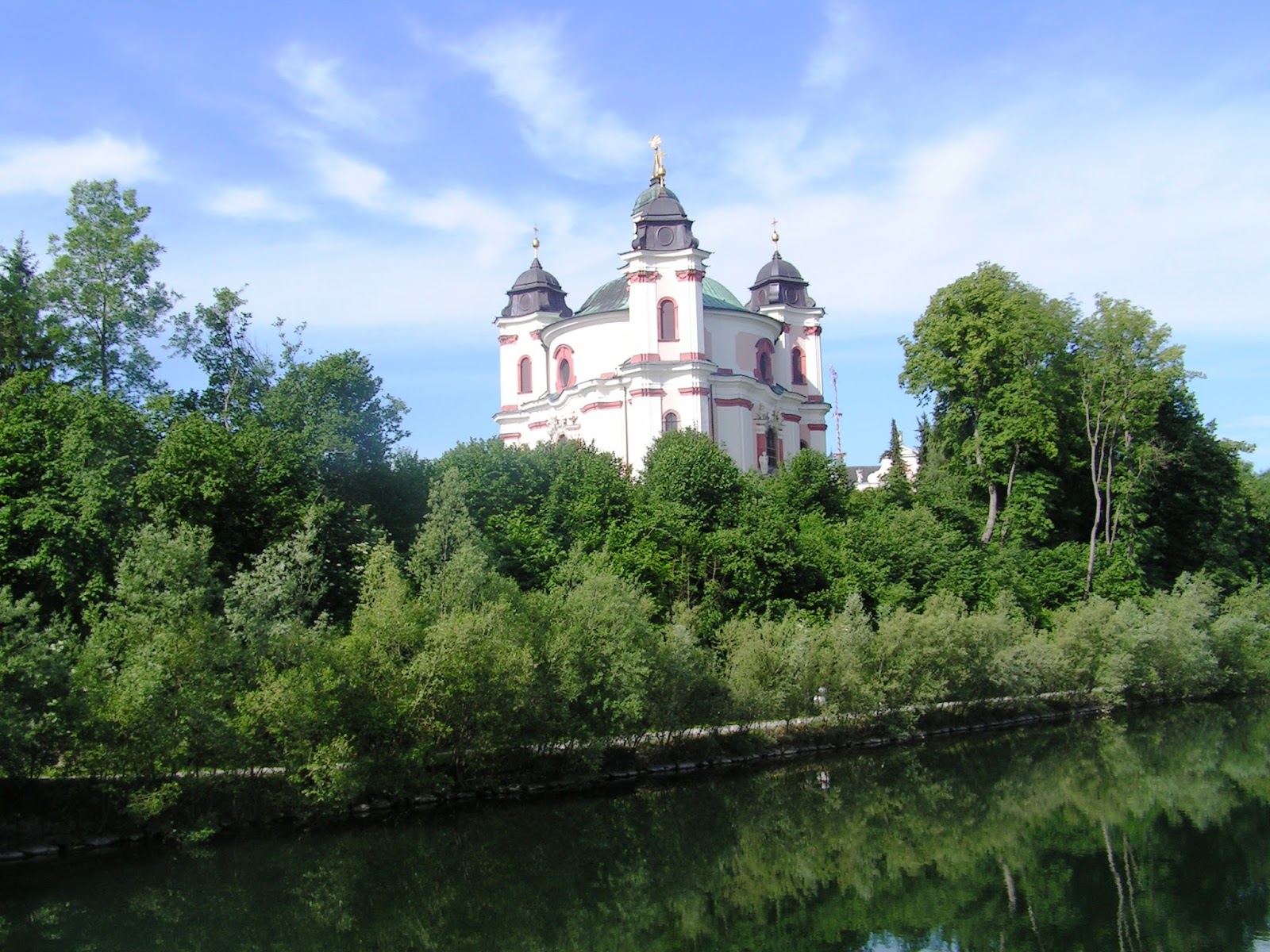
Of course, our nature has a lot to offer as well. When I look at the picture above, I can almost feel the sun, hear the crickets and smell the flowers. Because it is just like a typical view you get somewhere in Austria. We have all these beautiful lakes with clear water where you can swim. And in the mountains you can even drink the water directly from the stream because it is so clear. Yes, we also have these beautiful mountains with these nice alpine cabins to stay and eat Kaiserschmarrn.


And not to forget, we know how to enjoy a coffee! We can make cakes, cookies, also the bread here is quite unique all over the world. And never ever forget the wine and the beer and the schnaps! Whatever you need, you can find in Austria, the only thing ever missing is the sea. But fortunately we have really great chocolate to compensate that as well.


It might not get better from now, but we are actually already really really far on our way to perfection, so I guess it's time to start appreciating what we already have, stop complaining all the time and be a little more thankful for that, don't you think?